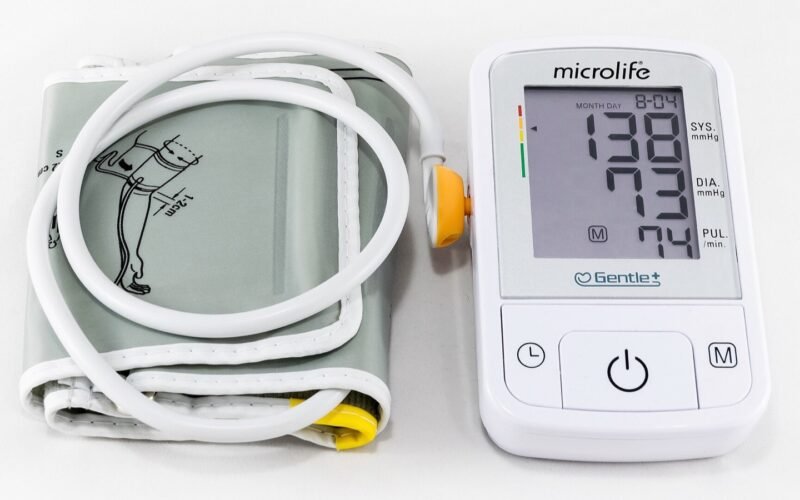
Adults who lowered their blood pressure with four weeks of home-based wall squats held on to most of the reduction over the following month with just one or two sessions a week, according to a randomized controlled trial of 100 adults published Sept. 29 in BMJ Open Sport & Exercise Medicine. Those who stopped training altogether returned to blood pressure levels no different from an untrained control group within four weeks. The findings were recirculated on Oct. 26 by ScienceDaily.
The peer-reviewed, open-access study was led by Harry T. Swift and Jonathan D. Wiles of Canterbury Christ Church University in the UK, with co-authors at St Mary’s University Twickenham, University College London and Keele University. It enrolled adults with systolic blood pressure between 120 and 140 mmHg, described as normal to high-normal, who were not taking blood pressure medication, did not smoke, drank no more than 14 units of alcohol a week and were not in a structured exercise program. The mean age was 37 and 45% were women.
Participants were randomized to five groups of 20. For the first four weeks, the four training groups did the same routine three times a week at home: four isometric wall-squat holds separated by two minutes of seated rest, with 48 hours between sessions. The depth of each squat, set by knee angle, was calibrated for each person in a laboratory test to target 95% of peak heart rate, and participants recorded their heart rate during the last 30 seconds of each hold so the angle could be adjusted. For weeks five to eight, the training groups dropped to three, two, one or zero sessions a week.
After the first four weeks, the training groups together showed greater reductions than control in systolic blood pressure (9.45 mmHg), diastolic pressure (5.47 mmHg) and mean arterial pressure (6.80 mmHg). By week eight, the change in systolic pressure from baseline was 13.73 mmHg in the three-times-weekly group, 6.95 mmHg with two sessions a week and 6.56 mmHg with one, according to the BMJ Group press release. The one- and two-session groups kept statistically significant reductions in systolic and mean arterial pressure compared with control, but not in diastolic pressure. Mean systolic pressure at week eight was 117 mmHg in the three-session group, 122 and 123 mmHg in the two- and one-session groups, and 128 and 129 mmHg in the stopped and control groups.
Only the group that kept training three times a week also preserved its improvements in total peripheral resistance, heart rate variability and baroreceptor reflex sensitivity, measures of vascular and cardiac autonomic function. “Lower frequency isometric exercise training may be sufficient to maintain blood pressure reductions over the short term,” the authors wrote, but “higher frequencies are required to preserve these benefits.” They describe less frequent training as “a pragmatic option for individuals with limited time or adherence challenges.”
The study received no specific grant funding, the authors declared no competing interests, and the trial was registered as ISRCTN62287921.
Why it matters
Isometric exercise, in which muscles contract without movement, has drawn interest because it is time-efficient and consistently produces clinically meaningful reductions in resting blood pressure, the authors note. The open question has been how much training is needed to keep the benefit once it is achieved. This trial suggests the answer is less than the amount needed to produce it in the first place: a single weekly session of four holds kept systolic pressure roughly 6 to 7 mmHg below baseline for at least a month.
For clinicians advising people with high-normal blood pressure, the results offer a concrete maintenance schedule, although the authors are explicit that more frequent training does more, both for blood pressure and for the vascular and autonomic measures that may underlie it. The group that stopped lost the benefit entirely within four weeks, which underlines that the effect depends on continued practice.
The caveats
The maintenance phase lasted only four weeks, which the authors describe as short for drawing conclusions about long-term cardiovascular outcomes; longer studies are needed to see whether less frequent training preserves benefits over months or years. Each group had just 20 people. Participants were relatively young, free of diagnosed hypertension and not on medication, so the findings do not necessarily apply to people being treated for high blood pressure. Blinding of participants and researchers was not possible and allocation was not concealed. The study measured resting blood pressure, not events such as stroke or heart attack. Anyone with existing hypertension or heart disease should talk to their doctor before starting isometric training.
What to watch
The authors call for trials with longer maintenance periods to establish whether reduced-frequency isometric training holds up beyond the short term, and whether the loss of vascular and autonomic adaptations at lower frequencies eventually erodes the blood pressure benefit as well.
This article is for general information and does not replace advice from a qualified clinician. Corrections: email the editor using the address on the Contact page.