The United States has recorded 4,588 confirmed measles cases so far in 2026, more than double the total for all of last year, according to Centers for Disease Control and Prevention (CDC) data as of Oct. 22. Pennsylvania, where the state health department has confirmed more than 1,300 cases and five deaths, is the center of the outbreak, and a CDC disease investigator has joined the state’s response.
The CDC’s count compares with 2,289 cases in all of 2025, which was itself the highest annual total since 1991, according to an analysis published by the University of Minnesota’s Center for Infectious Disease Research and Policy (CIDRAP). The agency has recorded 43 new outbreaks in 2026, and about 96% of this year’s cases (4,404 of 4,588) are linked to an outbreak. Its tally lists three measles deaths for 2026 and notes that the figure is subject to change.
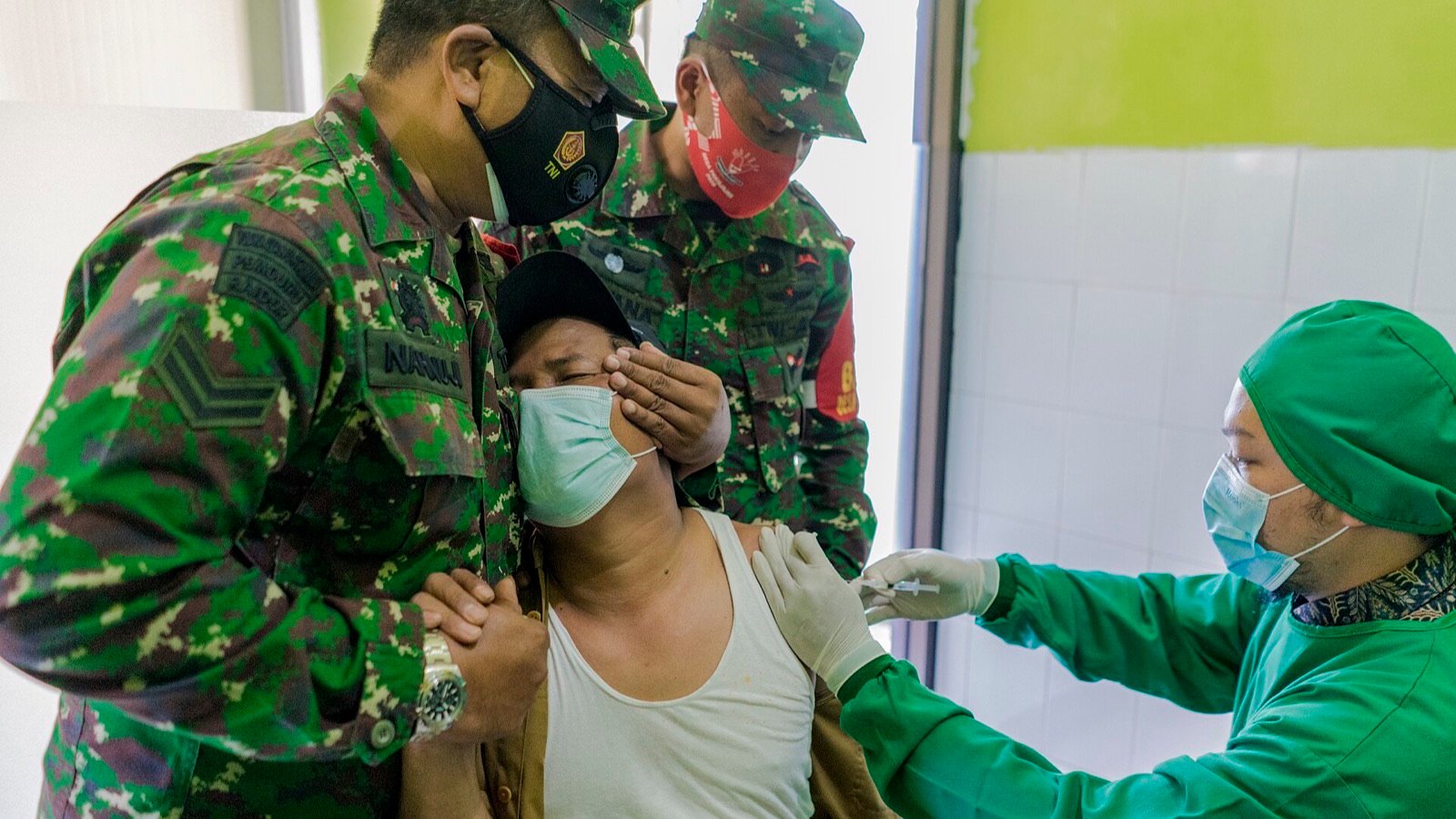
About 96% of this year’s patients were unvaccinated or had an unknown vaccination status, NPR reported, citing CDC data. The CDC says two doses of the measles, mumps and rubella (MMR) vaccine are 97% effective at preventing measles and one dose is 93% effective.
The Pennsylvania Department of Health has reported at least 1,338 confirmed cases in 44 counties, more than 250 hospitalizations and five deaths, three of them in Lancaster County, NPR reported on Oct. 25. Lancaster and Mifflin counties have the most cases, and local Amish communities with low vaccination rates have been the most affected. A sixth death, reported by the Franklin County coroner, is under state review, the Philadelphia Inquirer reported. In an Oct. 19 update, the state said only four confirmed cases, fewer than 1%, were in vaccinated people.
Pennsylvania formally asked the CDC for Epi-Aid assistance on Oct. 7, and a CDC Epidemic Intelligence Service (EIS) officer joined the state team on Oct. 19, the health department said. The officer is helping with “nowcast” modeling of case trajectories, estimates of the total burden of disease in the state, and analysis of how local vaccination drives change the outbreak’s course. Epi-Aid teams typically work with a state for one to three weeks, the Inquirer reported. About 300 state health staff, including 60 disease investigators, are working on the response, and federal officials have provided nearly $4 million in one-time funding for measles operations through most of 2027.
Demand for vaccination has risen. Pennsylvania providers gave more than 56,000 MMR doses in September, more than double the roughly 25,000 given in a typical month, and more than 39,000 in the first three weeks of October, according to the state and NPR. Elsewhere, New York had more than 160 confirmed cases as of Oct. 20 and Gov. Kathy Hochul has declared a disaster emergency; Utah has recorded more than 700 cases this year; and South Carolina at least 997, NPR reported.
The outbreak is unfolding alongside a change in federal vaccine policy. On Aug. 10, President Donald Trump signed an executive order, “Delivering Gold Standard Childhood Vaccine Recommendations for Americans,” that calls for splitting the combined MMR shot into three separate vaccines once such products are available in the US, according to CIDRAP. Single-antigen measles, mumps and rubella vaccines are not manufactured or approved in the US, and Merck said in 2009 it would not resume production. The order does not itself change vaccine recommendations, which are set through the CDC’s advisory committee and the CDC director. The CDC’s measles page states that “the measles, mumps, and rubella (MMR) vaccine is very safe and effective,” and in a statement reported by the Inquirer, HHS said Health Secretary Robert F. Kennedy Jr. and CDC Director Dr. Erica Schwartz recommend vaccination as the most effective way to prevent measles.
Why it matters
Vaccination coverage has fallen. CDC data show MMR coverage among kindergartners dropped to 92.4% in 2025–26, from 95.2% in 2019–20, which the agency says is below its 95% coverage target. The Pennsylvania figures illustrate the clinical cost: 247 of the 1,286 cases reported by Oct. 19, about one in five, had required hospitalization, and the state has issued clinical guidance for providers treating pregnant patients with measles and newborns with possible exposure.
For health departments, the Epi-Aid deployment is a sign of how outbreak management is shifting from case counting to modeling. The CDC officer’s assignment in Pennsylvania is explicitly about short-term projections, estimating true burden and measuring whether vaccination campaigns are changing the outbreak’s path.
What to watch
The US has held measles elimination status since 2000. According to CIDRAP, the national verification committee reviewed the CDC’s annual measles report in August and forwarded its assessment to the Pan American Health Organization, with a formal decision expected in November. The CDC updates its national count weekly, and Pennsylvania publishes case updates several times a week.
The caveats
Federal and state tallies differ. The CDC lists three measles deaths nationally for 2026, while Pennsylvania alone has confirmed five; the two counts are compiled separately, and the CDC notes its figure is subject to change. The 96% unvaccinated-or-unknown share comes from NPR’s reporting of CDC data rather than from the CDC page text. The executive order’s MMR provision depends on single-antigen vaccines that do not currently exist in the US market.
This article is for general information and does not replace advice from a qualified clinician. Corrections: email the editor using the address on the Contact page.