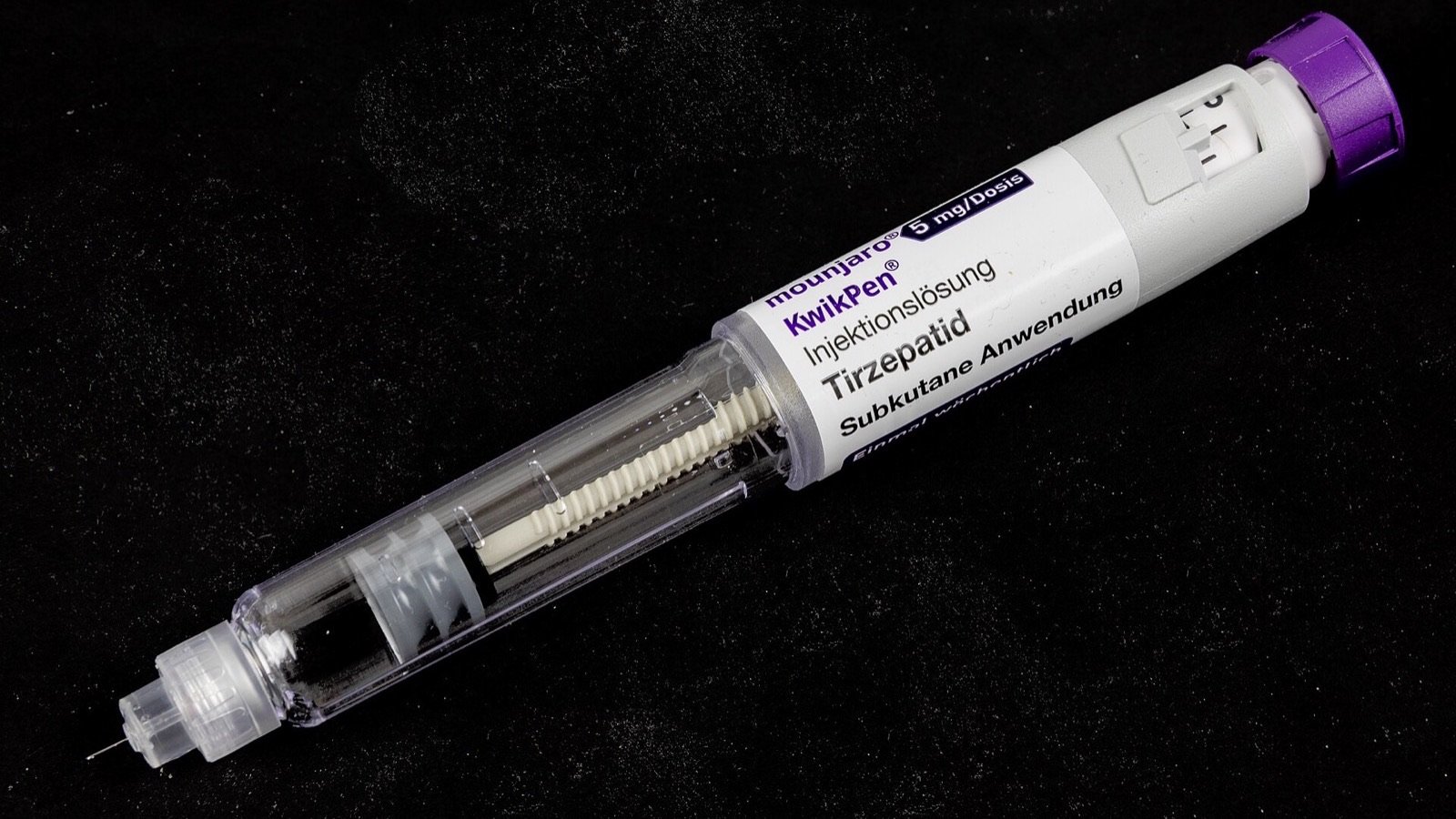
Women who started a GLP-1 receptor agonist, almost always tirzepatide, through a remotely delivered weight-management service in the United Kingdom lost an average of 16.1 kg, or 15.5% of their starting weight, after six months, according to an observational study published October 16 in Nature Medicine. The study had no comparison group, followed participants for only six months, and was co-authored by employees of the two companies that ran the program.
The cohort comprised 8,127 women aged 18 to 79 who enrolled between November 27, 2024 and January 31, 2025 in a self-pay program operated by eMed Healthcare UK and SheMed. Prescribing was done by UK-registered clinicians, with eligibility set at a body mass index of 30 or above, or 27 to 30 with a qualifying condition. Mean baseline BMI was 38.2 and mean weight 104.2 kg; 88% of participants were white and 37.6% lived in the two most deprived fifths of neighborhoods on the UK’s deprivation index. Tirzepatide accounted for 99.8% of prescriptions, with 19 women on semaglutide.
The program ran without routine in-person visits. Participants were onboarded by video with identity checks, completed home blood tests, logged weight weekly through an app and had a monthly clinician review, with doses escalated at the clinician’s discretion rather than on a fixed schedule; escalation was deferred when weight loss was adequate or side effects were significant. The mean tirzepatide dose at six months was 9.5 mg per week, which the authors note is well below the maximum licensed dose. The study was classed under UK Health Research Authority guidance as a secondary analysis of service data, so it did not require research ethics committee review.
Among 7,297 women with a six-month weight, 99.3% lost weight. Mean weight fell from 104.6 kg to 88.6 kg (95% confidence interval for the loss, 15.9 to 16.2 kg), and 83.1% lost at least 10% of their starting weight, 53.5% at least 15% and 22.4% at least 20%. Roughly 58% of the total loss came in the first three months. Among participants with paired blood tests, glycated hemoglobin fell by 3.3 mmol/mol and returned to the normal range in 84.5% of those who had started in the diabetes range and 96.3% of those in the prediabetes range. Total cholesterol fell by 0.77 mmol/L and LDL cholesterol by 0.61 mmol/L.
Retention at six months was 91.4%; the 698 women who stopped had lost an average of 5.4 kg by their last follow-up. Nearly two-thirds (62.7%) reported at least one side effect, and among those, 7.7% rated their worst symptom as severe. Eleven participants reported a pregnancy and all stopped treatment. The authors identified no serious treatment-related adverse events.
Why it matters
The authors say that evidence on how these drugs perform in digital care models, and in community populations of women, has been limited compared with the randomized trials run in clinic settings. They conclude that structured, digitally enabled obesity pharmacotherapy is feasible at scale and present the findings as implementation evidence for that care model. The weight loss observed is in the range reported in trials even though most participants were on moderate doses, which the authors attribute to clinician-guided titration.
The data also carry a signal for service design: discontinuation was lower among women who used the program’s symptom-mitigation package (5.0% versus 7.4%). The authors say mandatory biochemical monitoring through home testing allowed metabolic changes to be tracked outside a clinic. For health systems weighing how to expand access to these drugs, the study offers numbers on retention and adverse events from routine use, but not on cost-effectiveness or on how outcomes compare with conventional care.
The caveats
This is a retrospective analysis of routinely collected service data from a single commercial program, without a control group, so it cannot show that the digital model caused the outcomes or that it outperforms other approaches. Participants paid a fixed fee, which the authors say may select for more motivated people, and they note the provider partly subsidized the price in a way that may not be sustainable at scale. Medical histories were self-reported, blood pressure and waist circumference were not collected, and the complete-case analysis excludes the roughly 10% without a six-month weight. The cohort was predominantly white with limited comorbidity, and six months is too short to assess durability or what happens after treatment stops.
The work was funded by a grant from The Chicago Community Trust through a donor-advised fund administered by University College London, which the authors say had no role in the study. Two authors are employees of SheMed and eMed Healthcare UK, the companies that co-operated the program; corresponding author John Deanfield of UCL reports consulting fees from eMed and honoraria from Novo Nordisk among other companies, and co-author Donna Ryan reports consulting honoraria from Eli Lilly, Novo Nordisk and eMed. The paper is peer reviewed and open access, and its PubMed record lists it as published online ahead of print.
This article is for general information and does not replace advice from a qualified clinician. Corrections: email the editor using the address on the Contact page.