Women screened with digital breast tomosynthesis, often called 3D mammography, had 29% fewer invasive breast cancers diagnosed in the year after a normal result than women screened with standard digital mammography, according to 24-month follow-up of the German TOSYMA trial published Oct. 9 in The Lancet Oncology. Over the full two years, the trial’s primary endpoint, the reduction was 24% and did not reach statistical significance.
TOSYMA is a multicentre, open-label, randomized superiority trial run inside Germany’s quality-assured national mammography screening program at 17 screening sites in North Rhine-Westphalia and Lower Saxony. Between July 2018 and December 2020 it enrolled 99,689 women aged 50 to 70, randomized 1:1 to tomosynthesis plus a synthesized two-dimensional image or to digital mammography. The first report, in 2022, found tomosynthesis detected more invasive cancers at screening, 7.1 versus 4.8 per 1,000 women, but could not say whether that improved outcomes, according to a release from the University of Münster, which led the trial. The study was funded by the German Research Foundation (DFG) and the new paper is peer reviewed.
The new analysis, TOSYMA-2, followed the women whose screen was negative: 49,299 of 49,762 (99.1%) in the tomosynthesis group and 49,456 of 49,796 (99.3%) in the mammography group, with a median age of 57. Interval cancers, those diagnosed between scheduled screens, were identified by linking participants to the two states’ cancer registries, which capture more than 95% of new breast cancers. Registry staff and the data safety monitoring board were blinded to group assignment.
Within 24 months, 70 women in the tomosynthesis group and 92 in the mammography group were diagnosed with an invasive interval cancer, or 14.2 versus 18.6 per 10,000 screen-negative women. The adjusted odds ratio was 0.76 (95% confidence interval 0.55 to 1.06; p=0.11). Within the first 12 months the gap was wider and statistically significant: 22 versus 31 cancers, or 4.5 versus 6.3 per 10,000 (odds ratio 0.71; 0.52 to 0.97). Of invasive tumors diagnosed within two years, 83.5% had been found at the screening visit in the tomosynthesis arm versus 72.3% with mammography, a measure of program sensitivity; the rate at which cancer-free women were correctly classified as normal was similar in both groups. Interval cancers in the tomosynthesis group were also less often locally advanced or spread to the axillary lymph nodes, the university said.
The authors conclude that about a quarter of the invasive interval cancers that occur within two years of a digital mammogram might be avoided with tomosynthesis, while noting that the primary outcome missed significance. Stefanie Weigel of the University of Münster and University Hospital Münster is first author; Walter Heindel, the study leader, is corresponding author.
Why it matters
Interval cancers tend to be more aggressive and carry a worse prognosis than screen-detected cancers, which is why screening researchers use them as a surrogate for whether a technology is catching disease earlier, the Münster release notes. Breast cancer is the most common cancer in women in Germany, with about 75,000 new cases a year. TOSYMA is unusual in testing tomosynthesis at scale inside a routine national program rather than in a specialist setting, so its results reflect everyday screening conditions.
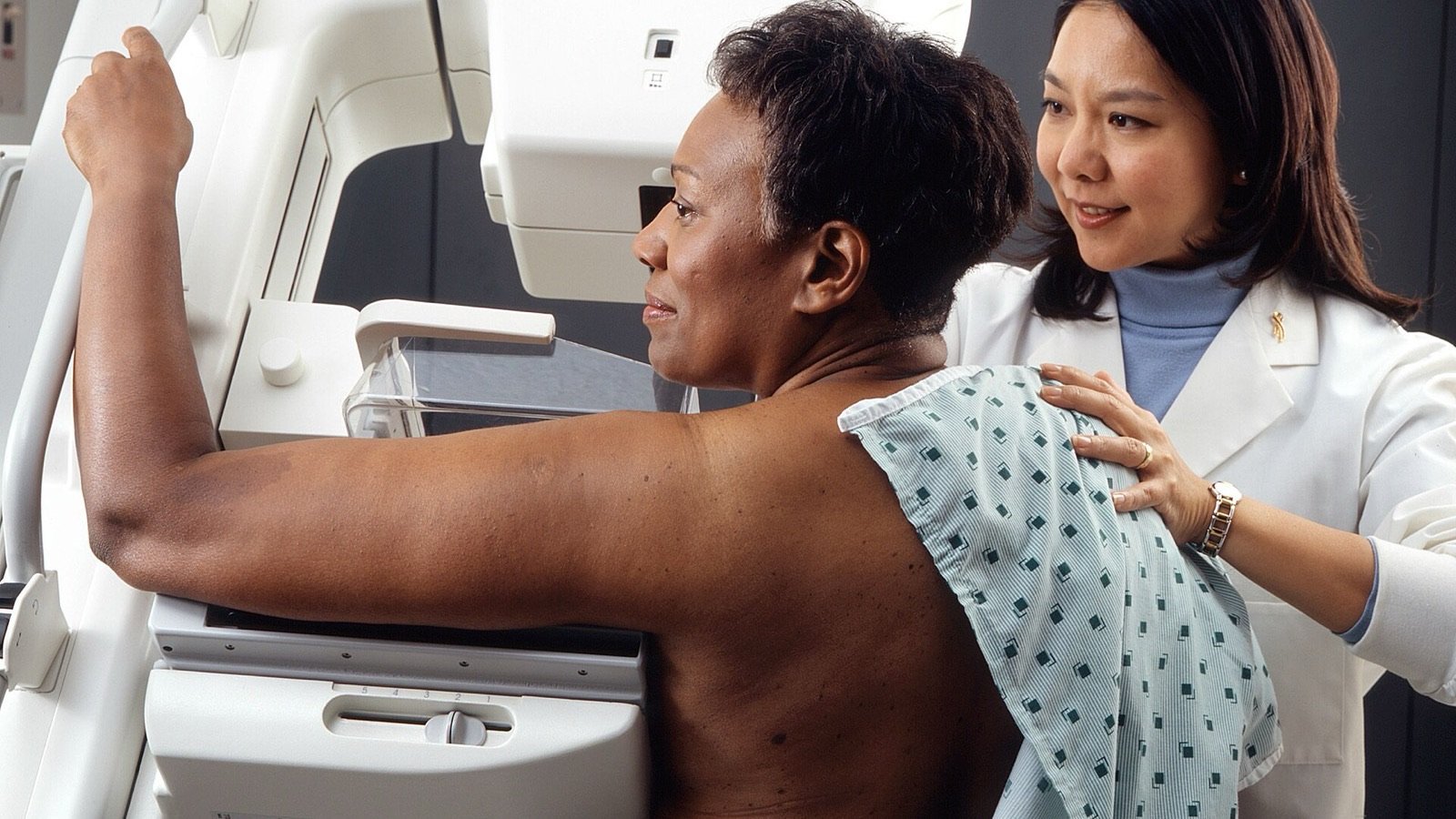
Tomosynthesis takes multiple low-dose X-ray images from different angles and reconstructs thin cross-sectional slices, so tumors are less likely to be hidden by overlying tissue. The authors say the data strengthen the scientific basis for using tomosynthesis in screening, but that whether it reduces advanced-stage disease, the outcome that matters most to patients, remains to be shown.
The caveats
The two-year primary endpoint was not statistically significant. Recruitment fell about 20,000 women short of plan, which the authors attribute partly to the COVID-19 pandemic, reducing the trial’s power to detect a difference. The design was open label, although outcome ascertainment was blinded. Interval cancer rates are a surrogate, not a measure of deaths or advanced disease. Some authors work at the National Reference Center Mammography Münster, which received vendor training cases, and some report lecture honoraria, according to the paper’s disclosures.
What to watch
The Münster team plans to analyze cancers detected at the next regular screening round in both arms to see whether tomosynthesis reduces the rate of advanced tumor stages compared with mammography. The trial is closed to enrollment but follow-up continues under registration NCT03377036.
This article is for general information and does not replace advice from a qualified clinician. Corrections: email the editor using the address on the Contact page.